The Monolithic Nandi of Chamundi Hill (2026): 1664 CE Giant Basalt Masterpiece
Resting proudly on a mid-ridge plateau of Chamundi Hill, the colossal Monolithic Nandi is one of the grandest achievements of 17th-century South Indian stone sculpture. Commissioned by Maharaja Dodda Devaraja Wadiyar as an act of royal piety, the sculpture was hewn directly from a massive, solitary basalt boulder located on the hillside.
Unlike statues assembled in parts, this monolithic bull sits in a serene recumbent posture, adorned with meticulously sculpted jewelry: layered bell chains, ankle anklets, decorative ropes, and floral garlands carved with razor-sharp fidelity.
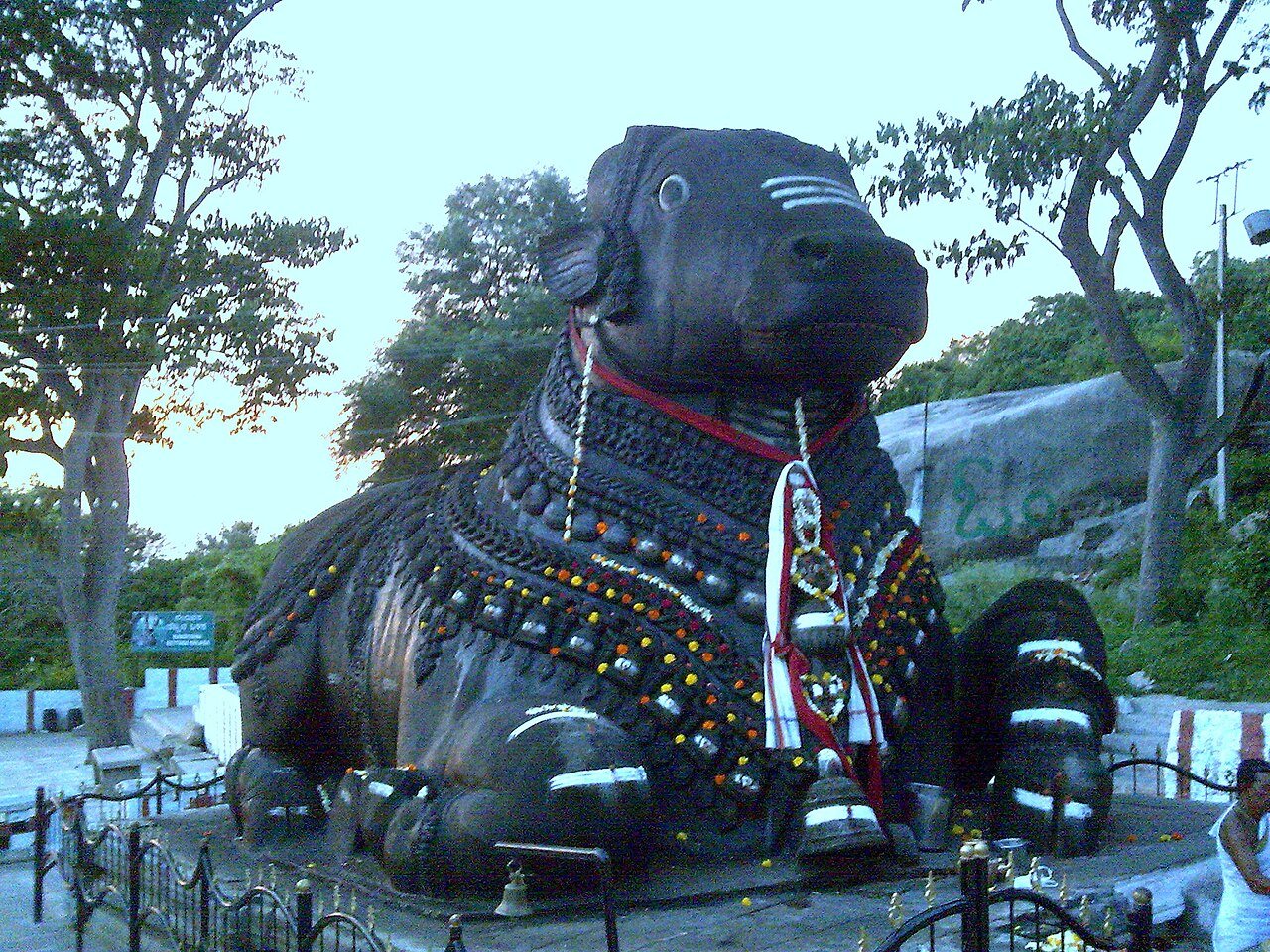
Nandi Monolith & Pilgrimage Pavilions
Priests perform daily milk and holy water abhisheka pooja every morning. Devotees perform a pradakshina (circumambulation) around the giant bull.
Frequently Asked Questions
Is the Nandi Bull older than the Chamundi Hill steps?
The 1,008 steps were constructed in 1659 CE, while the Nandi monolith was sculpted five years later in 1664 CE by the same monarch.
How We Researched & Field-Audited This Guide
At Mysore Mysuru, we enforce zero third-party outsourcing and zero AI-generated guesswork. Every entry, route, tariff, and timing in this dossier was physically audited in Mysuru:
- Physical On-Site Inspection: Verified operating counters, gate queues, parking tariffs, and photography permissions.
- Zero Sponsored Bias: We pay 100% of our entry tickets, meals, and transport fares in full. No commercial brand can buy inclusion.
- Official Gazette Alignment: Cross-referenced with the Archaeological Survey of India (ASI), Mysuru District Administration, Palace Board, and KSRTC transit notifications.
Explore More Field Guides
Handpicked stories in Heritage & Culture