Mysore Palace (Amba Vilas): Timings, Ticket Prices, Light Show Schedule & History (2026 Guide)
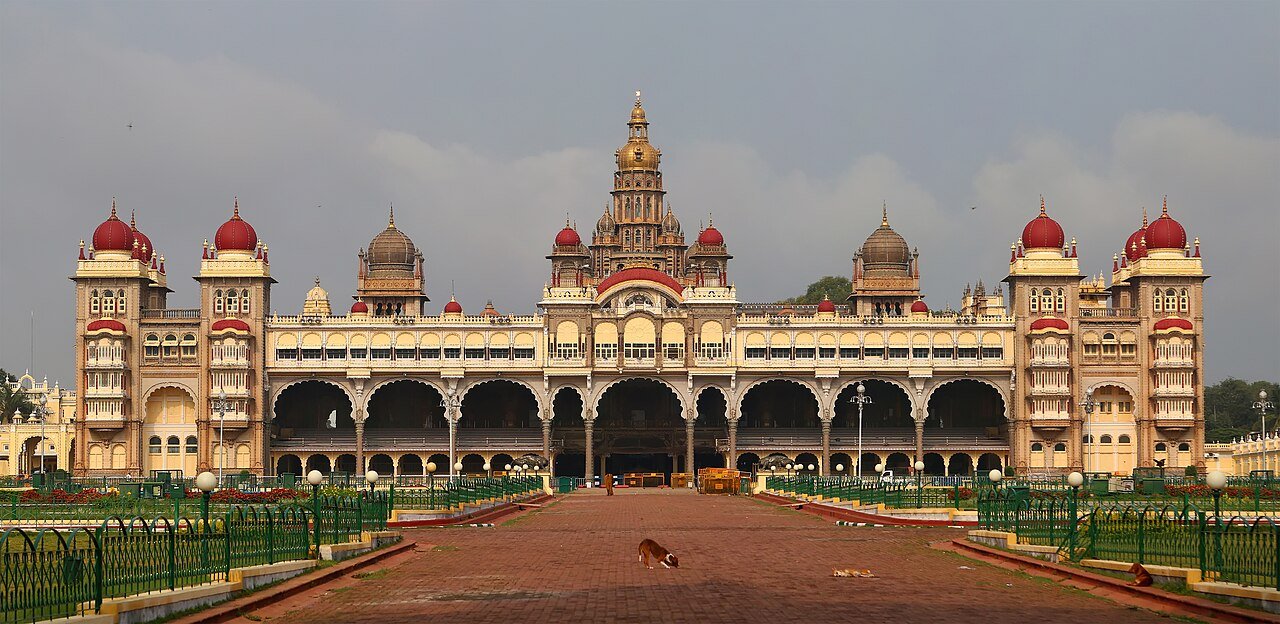
Standing regally at the geometric and cultural epicenter of the historic royal city, Mysore Palace (officially designated as the Amba Vilas Palace) is celebrated as South Asia’s most spectacular royal residence, attracting over six million domestic and international travelers each year.
The original palace was a grand multi-storied wooden structure that tragically burned to the ground in February 1897 during the lavish wedding celebrations of Princess Jayalakshammanni, the eldest daughter of Maharaja Chamaraja Wadiyar IX. Following the tragedy, Regent Maharani Kempananjammanni Vani Vilasa Sannidhana commissioned renowned British consultant architect Henry Irwin to conceive an unshakeable, fireproof palace constructed of solid fine-dressed granite.
Completed in 1912 after fourteen years of meticulous stonemasonry and artisan guild collaboration at a historic cost of Rs 41.4 lakh under Maharaja Nalwadi Krishnaraja Wadiyar (Krishna Raja Wadiyar IV), the palace represents the absolute zenith of the Indo-Saracenic revivalist movement, harmonizing Hindu, Rajput, Mughal, and European Gothic architectural aesthetics into a singular sovereign monument.
Amba Vilas Royal Complex & Fortified Gateway Courtyards
The palace is a three-tiered granite edifice flanked by square towers crowned with rich pink marble domes, dominated by a towering 145-foot central five-story tower bearing the gilded emblem and coat of arms of the Kingdom of Mysore (the two-headed mythical eagle, Gandaberunda). The royal perimeter encompasses twelve heritage Hindu shrines constructed between the 14th and 19th centuries, including the Sri Shweta Varahaswamy and Sri Prasanna Krishnaswamy temples.
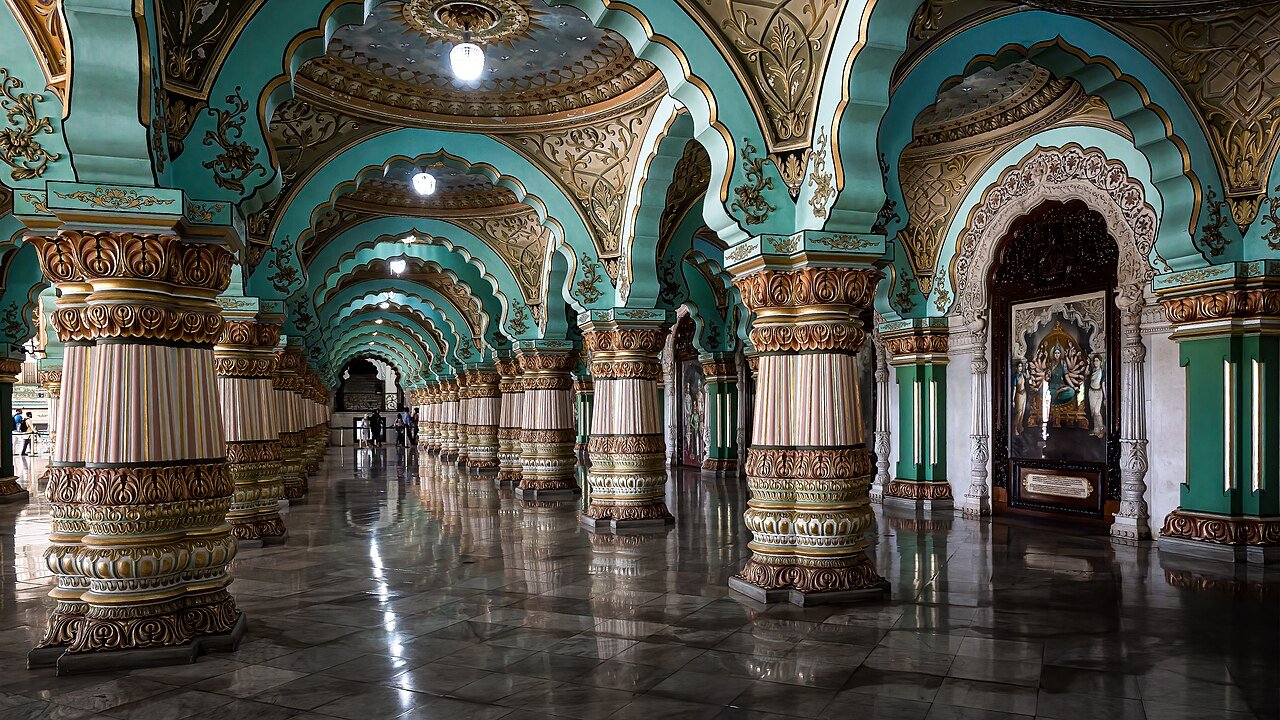
Kalyana Mantapa & Private Durbar Hall (Diwan-e-Khas)
Step into the octagonal Kalyana Mantapa (Royal Marriage Pavilion) to gaze upon a majestic stained-glass ceiling manufactured by Walter Macfarlane & Co. in Glasgow, Scotland, featuring geometric peacock medallions and floral stained-glass panels that flood the mosaic floor with prismatic amber and azure light. Continue to the Diwan-e-Khas (Private Durbar Hall), framed by a forest of fluted cast-iron columns painted in vivid turquoise and gold lacquer, with hand-painted ceilings and marble floors inlaid with semi-precious carnelian, lapis lazuli, and jasper.
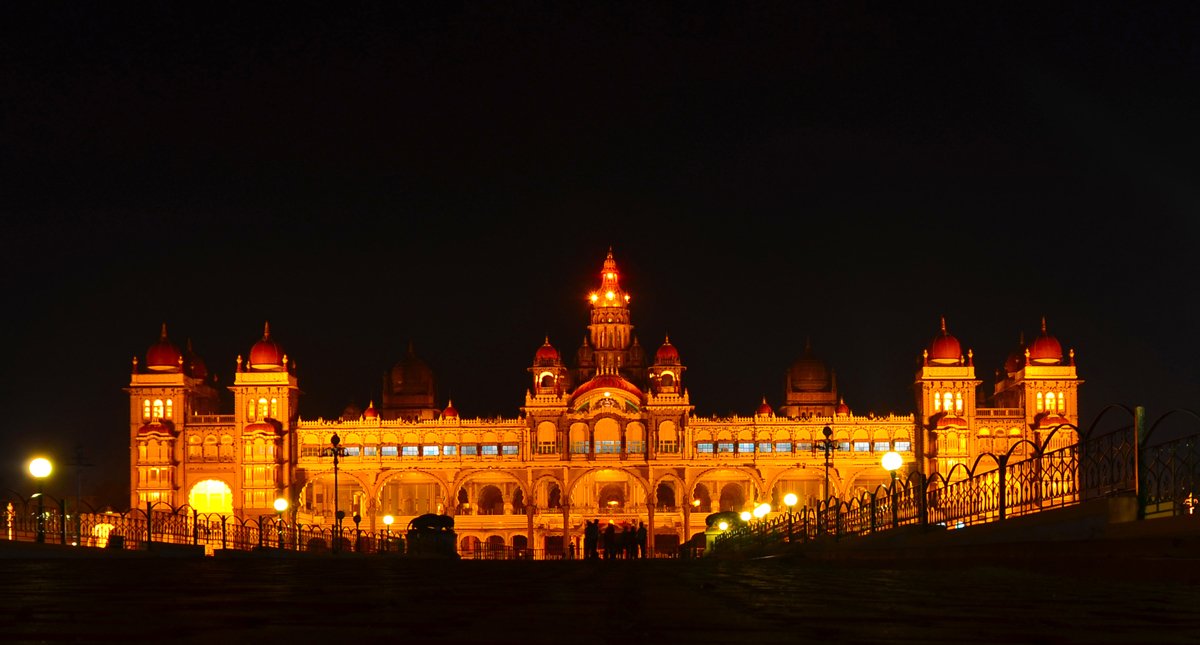
Grand Weekend Illumination & Sound & Light Spectacle
Every Sunday evening and across major state holidays, the darkened palace grounds transform into an ethereal fairy-tale kingdom as exactly 97,000 incandescent light bulbs ignite simultaneously across all towers, arches, balconies, and spires. The illumination is powered by dedicated high-voltage subterranean transformers and is accompanied by live classical martial anthems performed by the historic Karnataka Government Police Brass Band.
Step-by-Step Walkthrough: What to See Inside the Palace
Visitors follow a structured one-way wooden walkway through the opulent state apartments, galleries, and ceremonial halls. To maximize your visit, allocate at least 90 minutes to explore these key interior milestones:
- Gombe Thotti (Dolls Pavilion): The entrance vestibule displaying historic 19th-century wooden and clay dolls, European marble statues, ceremonial palanquins, and a 84-kg solid gold replica of the Mysore Palace.
- The Golden Howdah (Chinnada Ambari): The sacred 84-kilogram howdah crafted in 24-karat pure gold, mounted atop the lead royal elephant during the historic Vijayadashami Dasara procession.
- Public Durbar Hall (Diwan-e-Aam): A monumental colonnaded open pavilion measuring 99 feet long and 42 feet wide, where the Maharaja granted public audiences. It features a sweeping panoramic vista overlooking the palace parade grounds and Chamundi Hill.
- Royal Armory & Weaponry Room: Showcasing over 700 historic weapons dating from the 14th-century Vijayanagara Empire to the Anglo-Mysore wars, including double-edged broadswords, tiger-claw knuckledusters (Bagh Nakh), Damascus steel sabres, and jewel-encrusted ivory pistols.
- Royal Oil Portrait Gallery: A sequence of formal portrait salons presenting original 19th- and 20th-century oil paintings by celebrated court painters, depicting the genealogy of the Wadiyar dynasty in full ceremonial regalia.
Complete Timings & Ticket Price Matrix (2026)
| Tour Type / Experience | Days of Operation | Visiting Timings | Official Pricing (2026) | Booking Channel |
|---|---|---|---|---|
| Palace Daytime Museum Tour | Daily (All 365 Days) | 10:00 AM – 5:30 PM | Adults: Rs 100 / Kids (10-18): Rs 50 / Under 10: Free | Ticket Counters & MysorePalace.karnataka.gov.in |
| Foreign National Palace Tour | Daily (All 365 Days) | 10:00 AM – 5:30 PM | Rs 100 (Includes same-day admission) | Online Portal & Dedicated Fast-Track Counter |
| Sound & Light Show (Kannada) | Monday to Saturday | 7:00 PM – 7:45 PM | Adults: Rs 90 / Children: Rs 40 | Varaha Gate Ticket Booth (From 6:30 PM) |
| Sound & Light Show (English) | Monday to Saturday | 7:45 PM – 8:30 PM | Adults: Rs 100 / Children: Rs 50 | Varaha Gate Ticket Booth & Online |
| Grand Palace Illumination | Sundays & National Holidays | 7:00 PM – 7:45 PM | Free (Grounds Admission) | Open access through public gates |
| Multilingual Audio Guide Device | Daily during museum hours | 10:00 AM – 5:00 PM | Rs 100 per device (8 languages) | Audio Desk at Security Checkpoint |
Practical Visitor Logistics, Parking & Accessibility
Arriving by Vehicle & Parking: Secure paid four-wheeler and two-wheeler parking is located directly outside the Varaha Gate (South) and near the Exhibition Grounds opposite the East Gate. Parking fees are Rs 40 for cars and Rs 20 for two-wheelers for up to 4 hours.
Accessibility for Senior Citizens: The Palace Board provides complimentary manual wheelchairs at the inner security check. Battery-operated 6-seater golf carts operate from the main gate to the palace entrance steps for Rs 50 per person.
Photography Rules: Handheld digital SLR cameras, video camcorders, and mobile phone cameras are strictly prohibited inside the interior royal chambers. Security officers actively inspect visitors. Photography is unrestricted on all outdoor gardens, courtyards, and external facades.
Frequently Asked Questions
Can visitors take mobile phones or cameras inside the palace rooms?
When is the best time to visit Mysore Palace to avoid heavy crowds?
Is the palace illuminated every single night?
How much time should I allocate for a thorough Mysore Palace visit?
Are professional tourist guides available at the palace gate?
How We Researched & Field-Audited This Guide
At Mysore Mysuru, we enforce zero third-party outsourcing and zero AI-generated guesswork. Every entry, route, tariff, and timing in this dossier was physically audited in Mysuru:
- Physical On-Site Inspection: Verified operating counters, gate queues, parking tariffs, and photography permissions.
- Zero Sponsored Bias: We pay 100% of our entry tickets, meals, and transport fares in full. No commercial brand can buy inclusion.
- Official Gazette Alignment: Cross-referenced with the Archaeological Survey of India (ASI), Mysuru District Administration, Palace Board, and KSRTC transit notifications.
Explore More Field Guides
Handpicked stories in Heritage & Culture